Barbless.coBarbless.co
  • Home
  • Map
  • Reports
  • Guides
  • Fish
  • Hatches
  • Podcast
Sign in
Barbless.co

The more you understand, the more there is to see.

  • IdahoLive
  • CaliforniaSoon

Explore

  • Map
  • Reports
  • Browse reports
  • By region

Waters

  • River search
  • Guides & outfitters

Learn

  • Fish species
  • Hatches & forage
  • Podcast

Company

  • About
  • Contact
  • Editorial policy
  • Releases
  • Legal

© 2026 Barbless.co. Flow and gauge data from USGS; weather from Open-Meteo. · v2026.10.18.2

  1. Home
  2. Hatches & Forage
  3. Stoneflies
  4. Salmonfly

Updated July 20, 2026

← Back to map
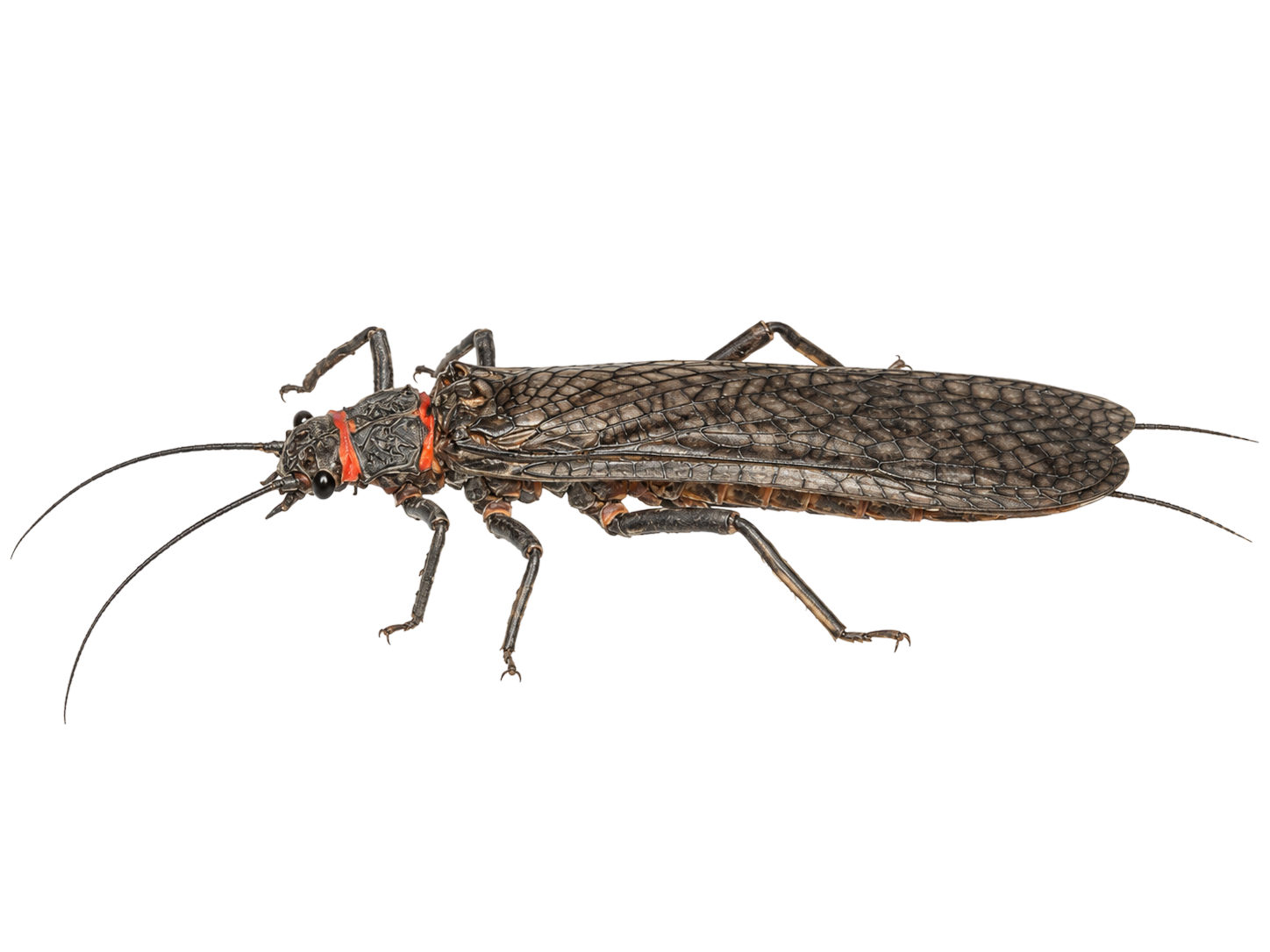
Salmonfly, Wings Folded One
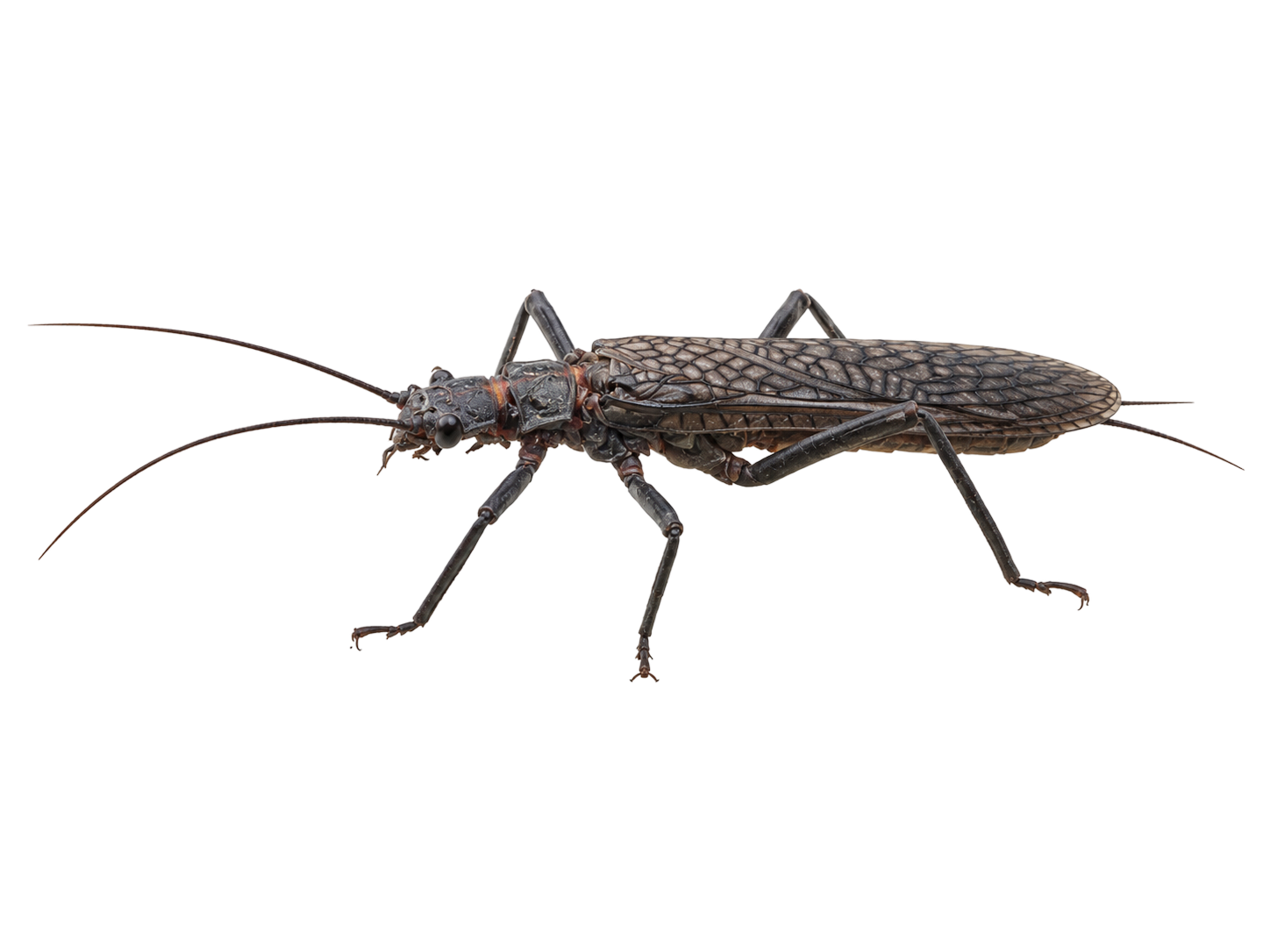
Salmonfly, Wings Folded Two
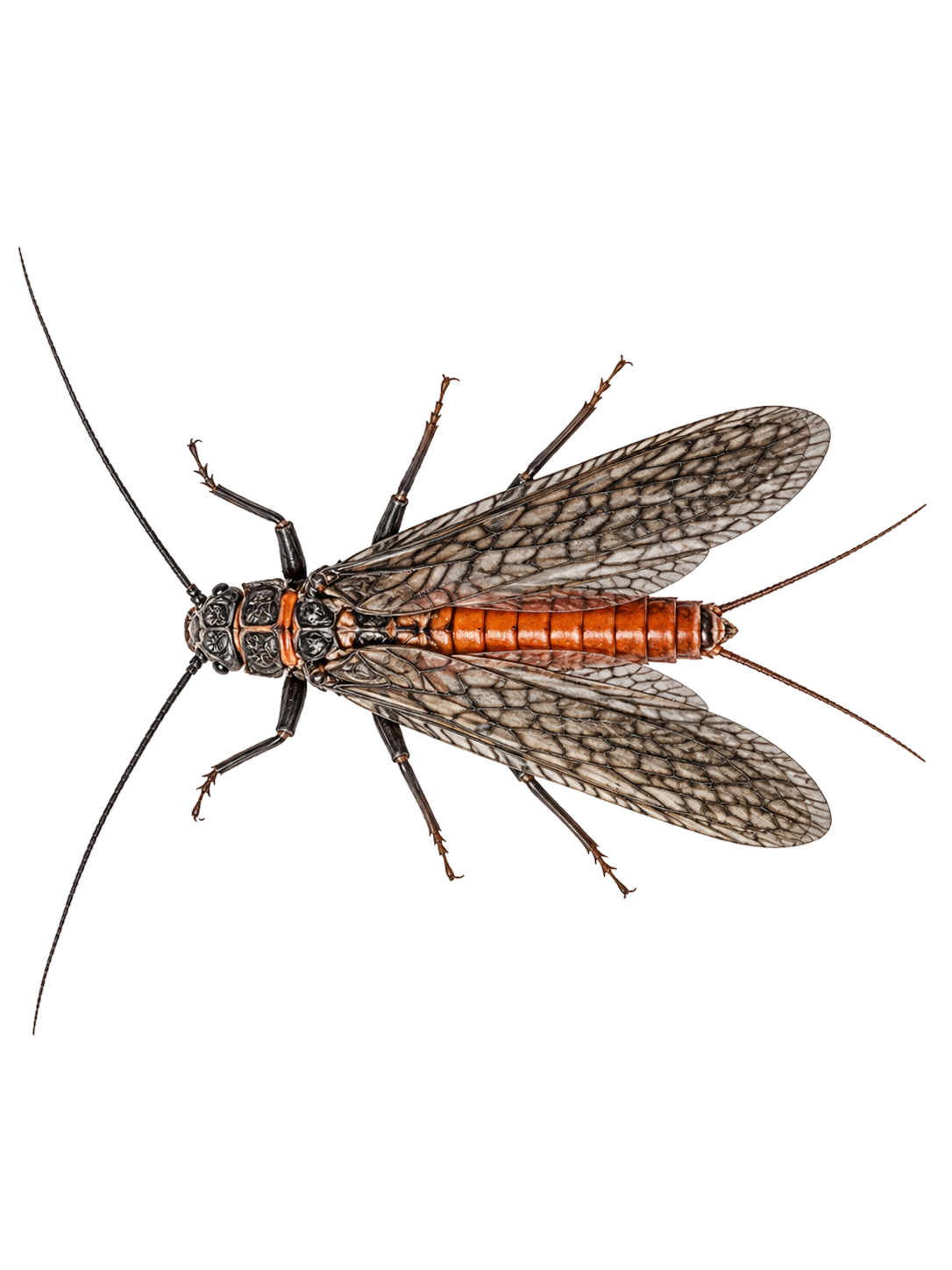
Salmonfly, Wings Open
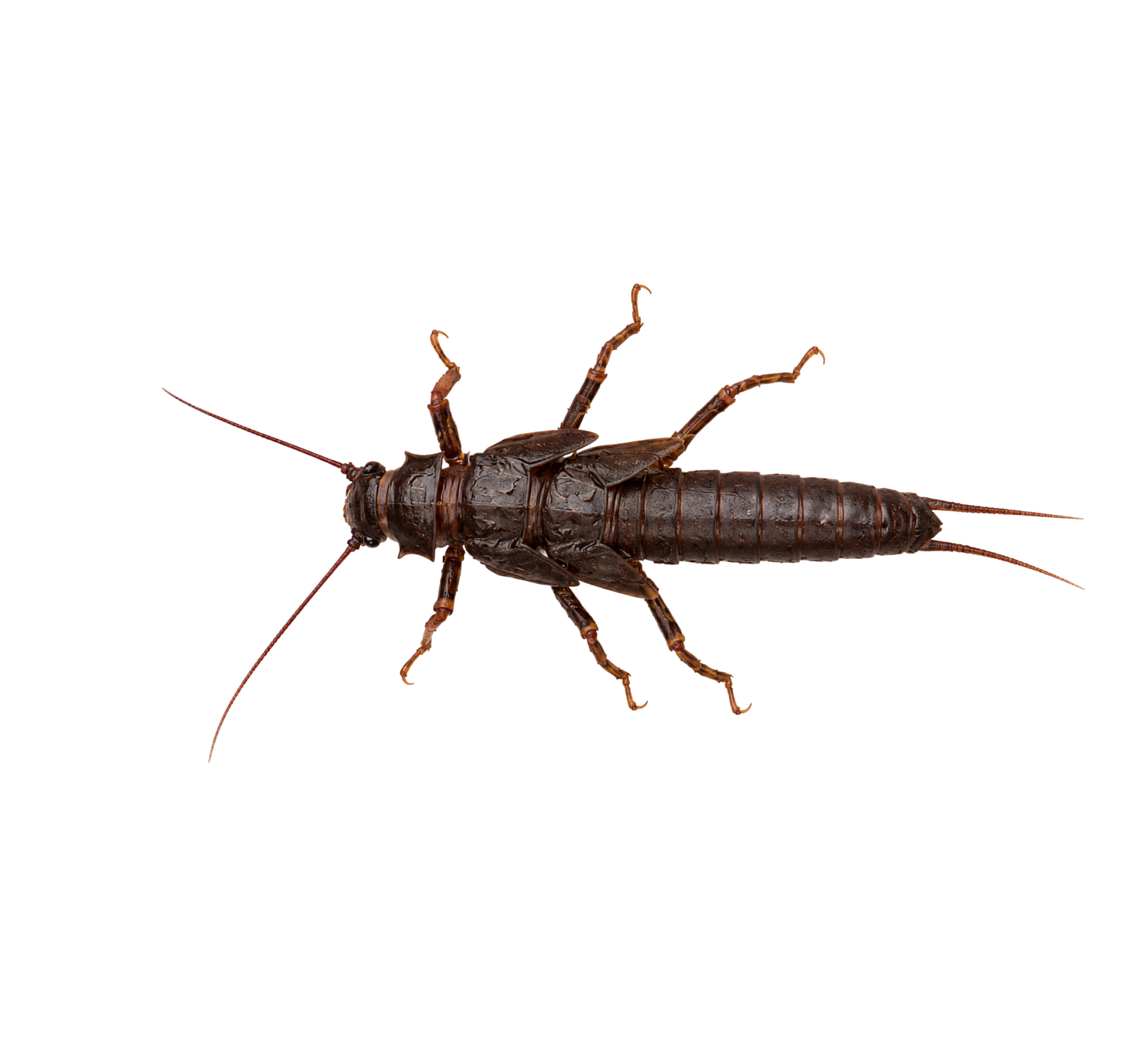
Salmonfly, Nymph
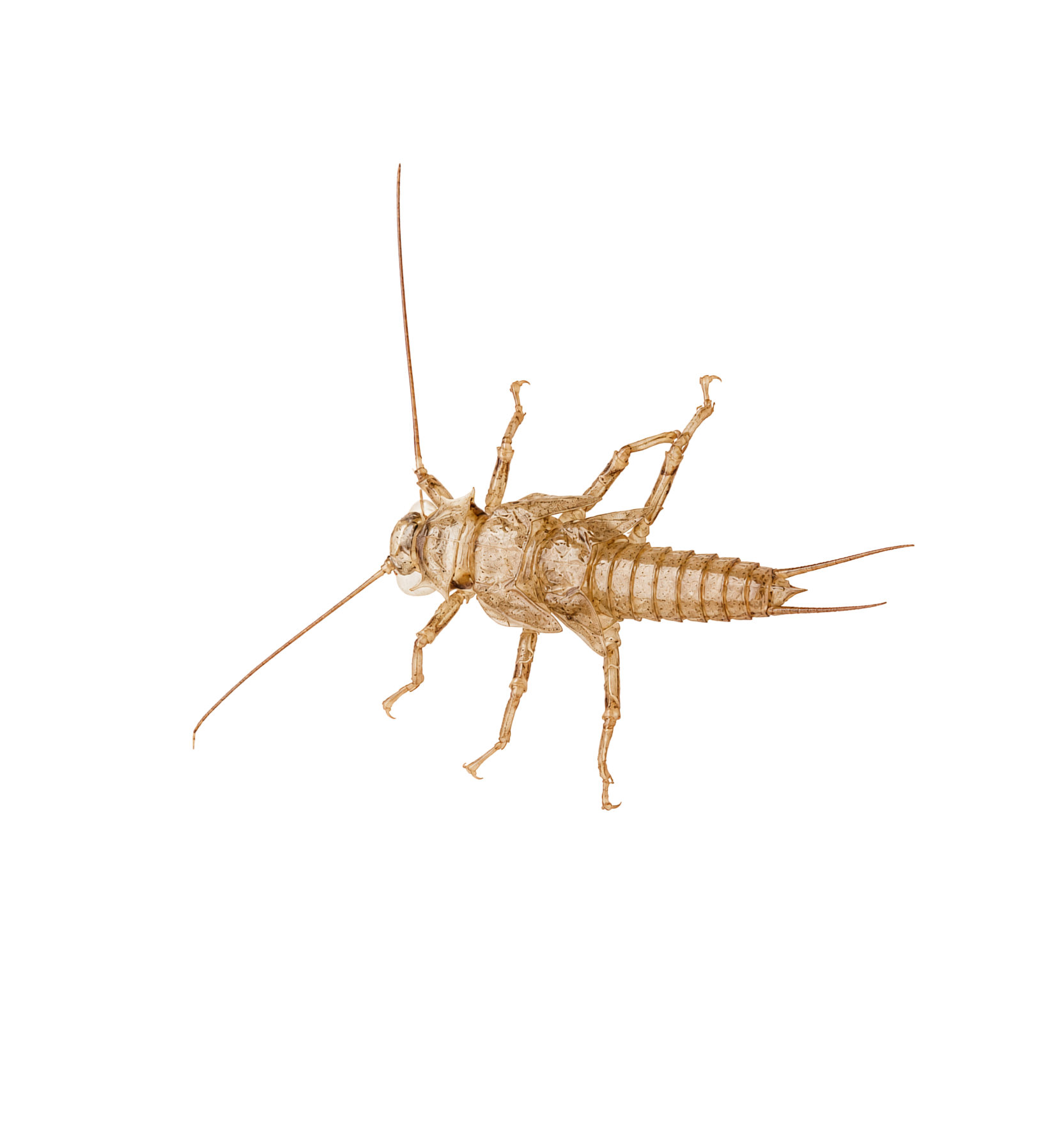
Salmonfly, Discarded Exoskeleton
Wings Folded One

Hatches › Stonefly

Stonefly

Salmonfly

Pteronarcys californica · species

A huge spring stonefly whose migrating nymphs and egg-laying adults bring trout to the banks.

Overview

Category

Stonefly

Category

Stonefly

Category

The insect or forage category for this profile.

Size

Nymphs commonly run very large and can exceed 2 inches; adults are likewise among the largest stoneflies anglers see.

Size

Nymphs commonly run very large and can exceed 2 inches; adults are likewise among the largest stoneflies anglers see.

Size

Typical size range anglers imitate on the water.

Key stages

Eggs, Nymph, Mature Nymph, Emerger, Adult Salmonfly, Mating Adults, Egg Laying Female

Key stages

Eggs, Nymph, Mature Nymph, Emerger, Adult Salmonfly, Mating Adults, Egg Laying Female

Key stages

Life stages most relevant to fly fishing this hatch or forage.

Water types

Freestone rivers, Fast runs, Riffles, Pocketwater

Water types

Freestone rivers, Fast runs, Riffles, Pocketwater

Water types

Water types where this bug or forage is commonly found.

About Salmonfly

Pteronarcys californica is the giant salmonfly, a large western stonefly in the family Pteronarcyidae and one of the most important hatch-matching insects in fly fishing. Its long aquatic life and dramatic shoreline emergence make both nymphs and adults high-value trout food.

Also known as: Giant Stonefly

Life Cycle

Salmonflies, important prey for trout, spend most of their lives underwater as nymphs. Their brief adult stage is dedicated to mating and egg-laying, continuing their multi-year life cycle.
Eggs

Eggs

Female Salmonflies deposit thousands of eggs on the water's surface. These eggs then sink to the river bottom, settling among rocks.

Nymph

Nymph

Salmonfly nymphs reside among rocks and submerged debris in the river, where they feed and grow for one to four years.

Mature Nymph

Mature Nymph

As nymphs mature and approach emergence, they typically migrate towards the river banks, often under the cover of night or in the early morning hours.

Emerger

Emerger

The nymph crawls out of the water onto rocks or streamside vegetation. Here, it sheds its exoskeleton to transform into an adult.

Adult Salmonfly

Adult Salmonfly

Newly emerged adult Salmonflies rest to allow their wings to dry and harden before they can take flight.

Mating Adults

Mating Adults

Adult Salmonflies mate in the air near the river or within streamside vegetation.

Egg Laying Female

Egg Laying Female

After mating, female Salmonflies return to the water to deposit their eggs, thus restarting the life cycle.

Stages
Anglers mainly fish the nymph and adult. Nymphs live in the river for roughly three to four years before crawling out to emerge; adults then mate, and females return to deposit eggs.
Emergence cues
Look for emergence in spring as water warms, especially when mature nymphs collect in shallow edges and on nearshore rocks. Adult activity often builds on warm days, with egg-laying adults returning over the water later in the hatch.
Behavior
Late in development, nymphs migrate from midriver toward the shoreline, making them especially vulnerable before they crawl out on rocks or bankside structure to emerge. Adults are clumsy, fluttering insects, and females may fall or skate during egg laying.

How to Tie Salmonfly Patterns

Nymph

Tying the Soft Hackle Salmon Fly Nymph - Dressed Irons

Dressed Irons

Materials

  • Tiemco 200R#6Hook
  • Danville Thread70 DenierBlack
  • Lead Wire.020optional
  • BiotBlack, Turkey or Goose (Tail)
  • Round Vinyl RibLargeBlack
  • Life Cycle DubbingBlack (Abdomen)
  • Rayon ChenilleMediumBlack (Thorax)
  • Collard Brown HackleLegs
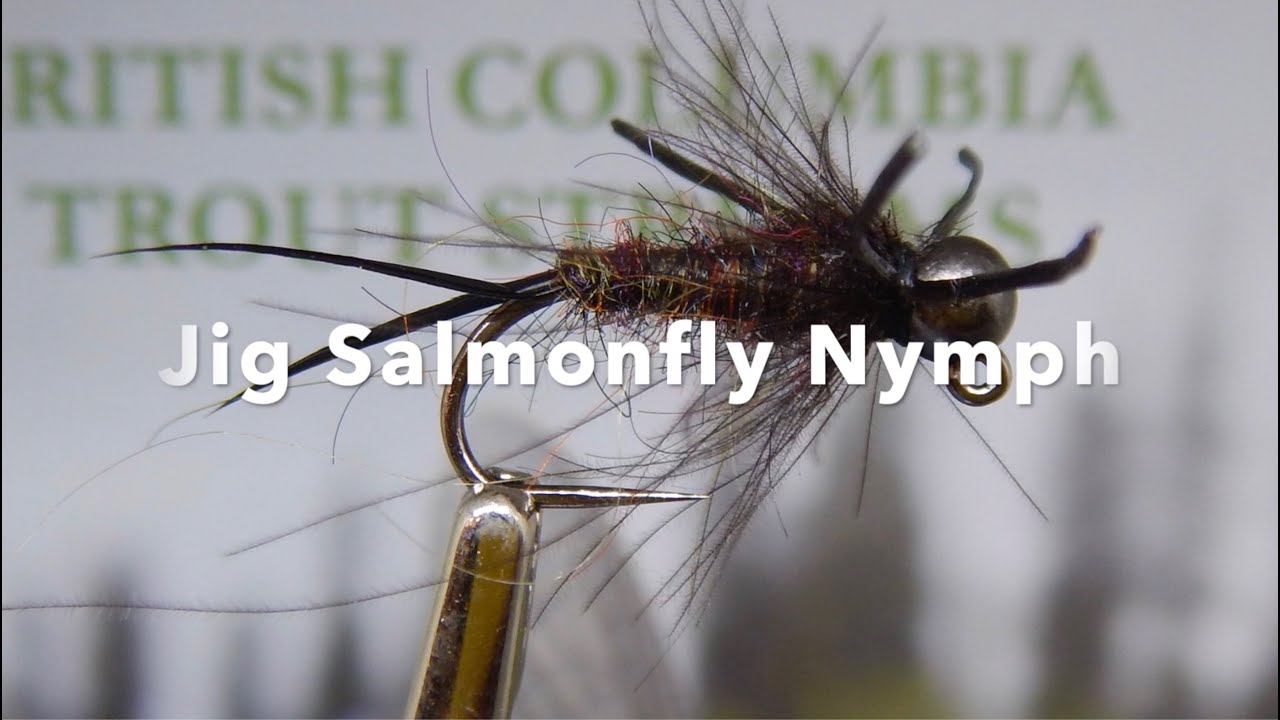
Mature Nymph

Jig Salmonfly Nymph

Danie Erasmus (pgflyfisher)

Materials

  • Hooksize 6
  • Hanak 400BLsize 6or Sierra BL Barbless hook
  • Tungsten bead4.6 millimetergunmetal
  • Threadsize 6black
  • Lead wire0.0254X area
  • Uniflexblack detector uniflex

Emerger

The Only Salmonfly Pattern You Need This Spring- Mothership Salmonfly: Dry Fly Tying Tutorial

Caddis Fly Angling Shop

Materials

  • Ahrex 570 Dry LongSize 4
  • Semperfli Nanosilk Black50D
  • Hareline 2mm Hi Float FoamOrange
  • Antron DubOrange
  • Hareline 1mm Ultra Thin Fly FoamBlack
  • Hareline WebwingMedium Dun
  • Copic MarkersPale Sepia, Blue, Copper
  • Loctite Brush On
  • Montana Fly Company Widow’s WebGrey

Adult Salmonfly

Slammin Fly I AJ Ties a Very Buoyant Salmon Fly | Fly Tying Tutorial

Fly Fish Food

Materials

  • u680 streamer hooksize 6
  • Semper Fly thread6/0 fluorescent orange
  • Foamfor body
  • Zap-A-Gapglue to secure fly
  • Sharpiefor wing stripes

Where It Hatches

Salmonfly

One species, multiple rivers.

RiverJANFEBMARAPRMAYJUNJULAUGSEPOCTNOVDEC
  • Big Wood River
  • Blackfoot River
  • Coeur d'Alene River
  • Crooked Fork
  • Fall River
  • Henrys Fork of the Snake River
  • Kelly Creek
  • Little North Fork Clearwater River
  • Little Salmon River
  • Lochsa River
  • Loon Creek
  • Middle Fork Boise River
  • Middle Fork Salmon River
  • North Fork Boise River
  • North Fork Clearwater River
  • North Fork Coeur d'Alene River
  • North Fork Payette River
  • North Fork Saint Joe River
  • Priest River
  • Saint Joe River
  • Saint Maries River
  • Salmon River
  • Selway River
  • Snake River, Osgood Diversion Dam to Henrys Fork
  • South Fork Boise River
  • South Fork Clearwater River
  • South Fork Payette River
  • South Fork Snake River
  • Teton River
  • Valley Creek

Fly Patterns

  • Chubby Chernobyl#6-12
  • Pat's Rubber Legs#4-10
  • Rogue Foam Stone#4-10
  • Stimulator#6-14

Angler Notes

Why it matters
Few aquatic insects move fish like salmonflies. Their size gives trout a big-calorie target, and the pre-hatch nymph migration plus the adult fall-in phase both concentrate feeding along banks and current seams.
Imitation tips
Fish large, dark stonefly nymphs with a sturdy profile before and during the hatch. For adults, use buoyant orange-and-dark salmonfly patterns that suggest the oversized body and tented wings; an egg-laying female look can be useful when adults are active over the water.
Key life stages
NymphAdult
Presentation
Probe banks, soft edges, seams, and the shallows beside fast water with nymphs, since mature insects migrate shoreward before emergence. During the adult phase, work tight to banks, grassy edges, rocks, and overhanging structure with deliberate drifts, occasional twitches, or a skated egg-layer presentation when fish are looking up.

Identification

Key features
Nymphs are thick-bodied, very large stoneflies with a dark back, lighter belly, and a robust crawling profile. Adults are oversized orange-and-dark stoneflies with long wings held flat over the body; females may show a bright orange egg mass at the tip of the abdomen.
Size
Nymphs commonly run very large and can exceed 2 inches; adults are likewise among the largest stoneflies anglers see.
Coloration
Nymphs are dark brown to nearly black above with a paler underside and sometimes subtle abdominal patterning. Adults are dark overall with bright orange on the abdomen, leg joints, and parts of the thorax.
Similar bugs
Golden StoneSkwala StoneYellow SallyLarge dark stonefly nymphs

Habitat

Water types
Freestone riversFast runsRifflesPocketwater
Substrate
Medium to large loose rock and rubble in higher-gradient channels, with mature nymphs shifting toward shallow bankside rocks before emergence.
Conditions
Clean, well-oxygenated, higher-velocity streams and rivers typical of western salmonfly water.

Eaten By

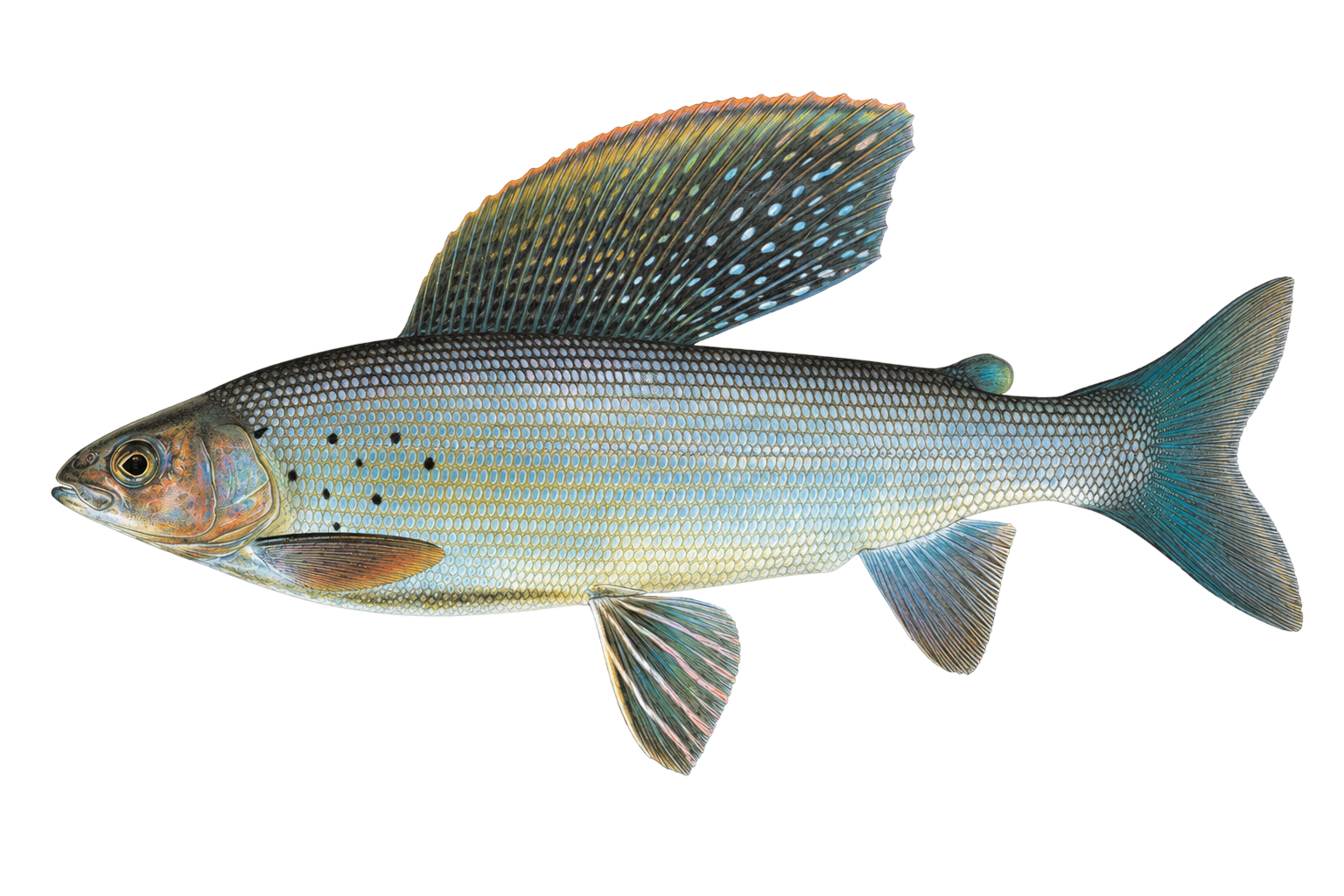
Arctic Grayling
Arctic Grayling
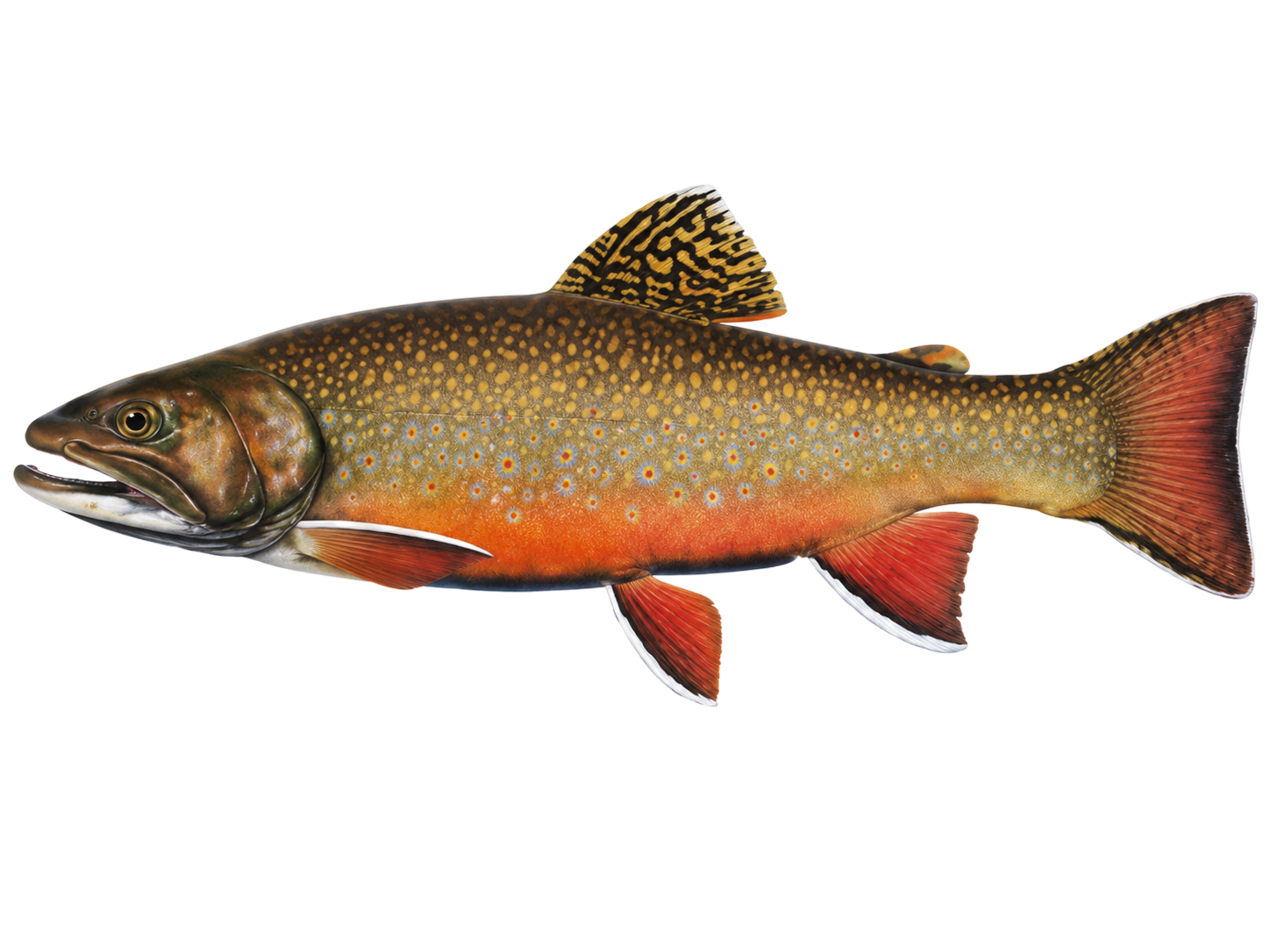
Brook Trout
Brook Trout
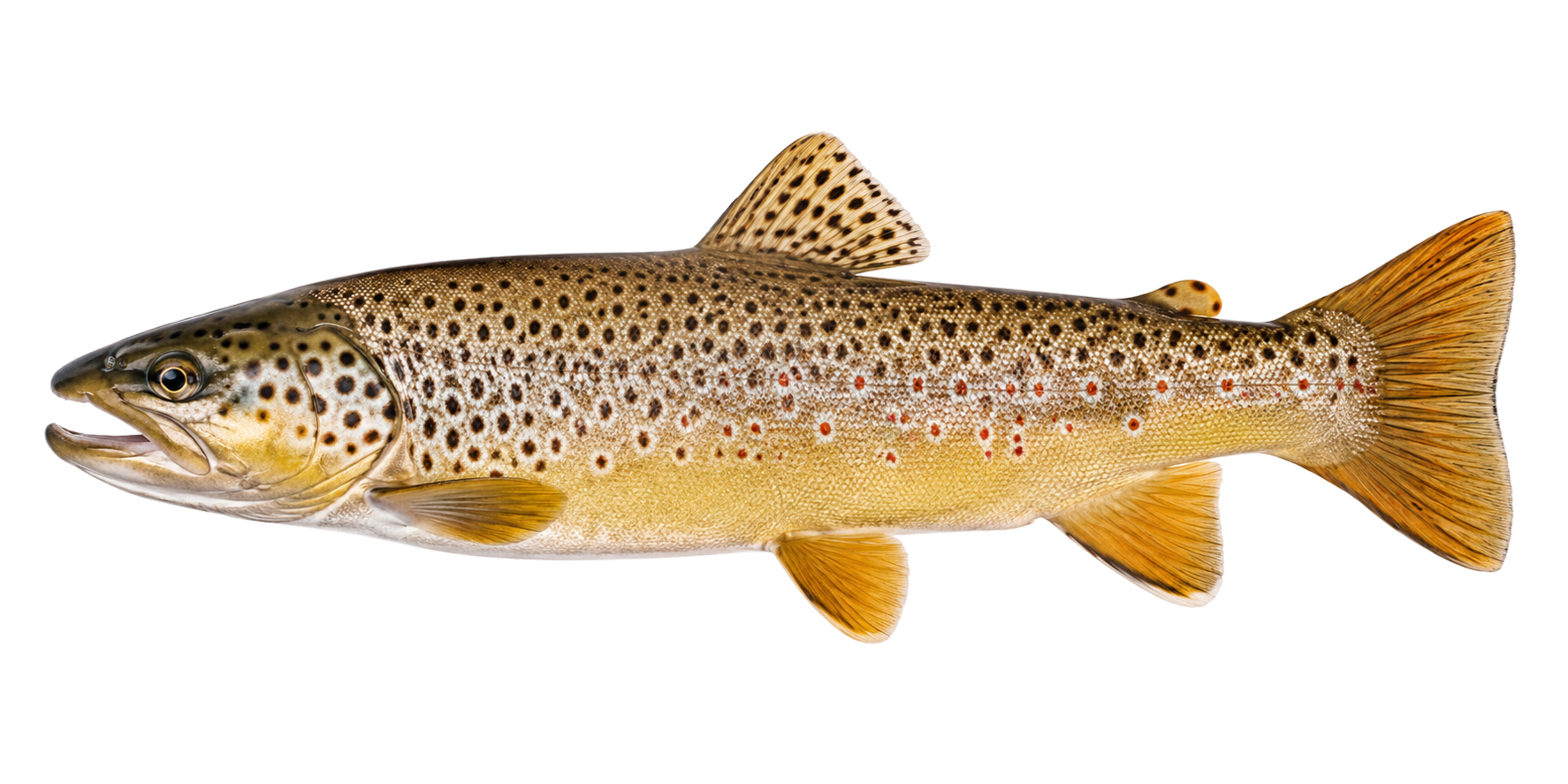
Brown Trout
Brown Trout
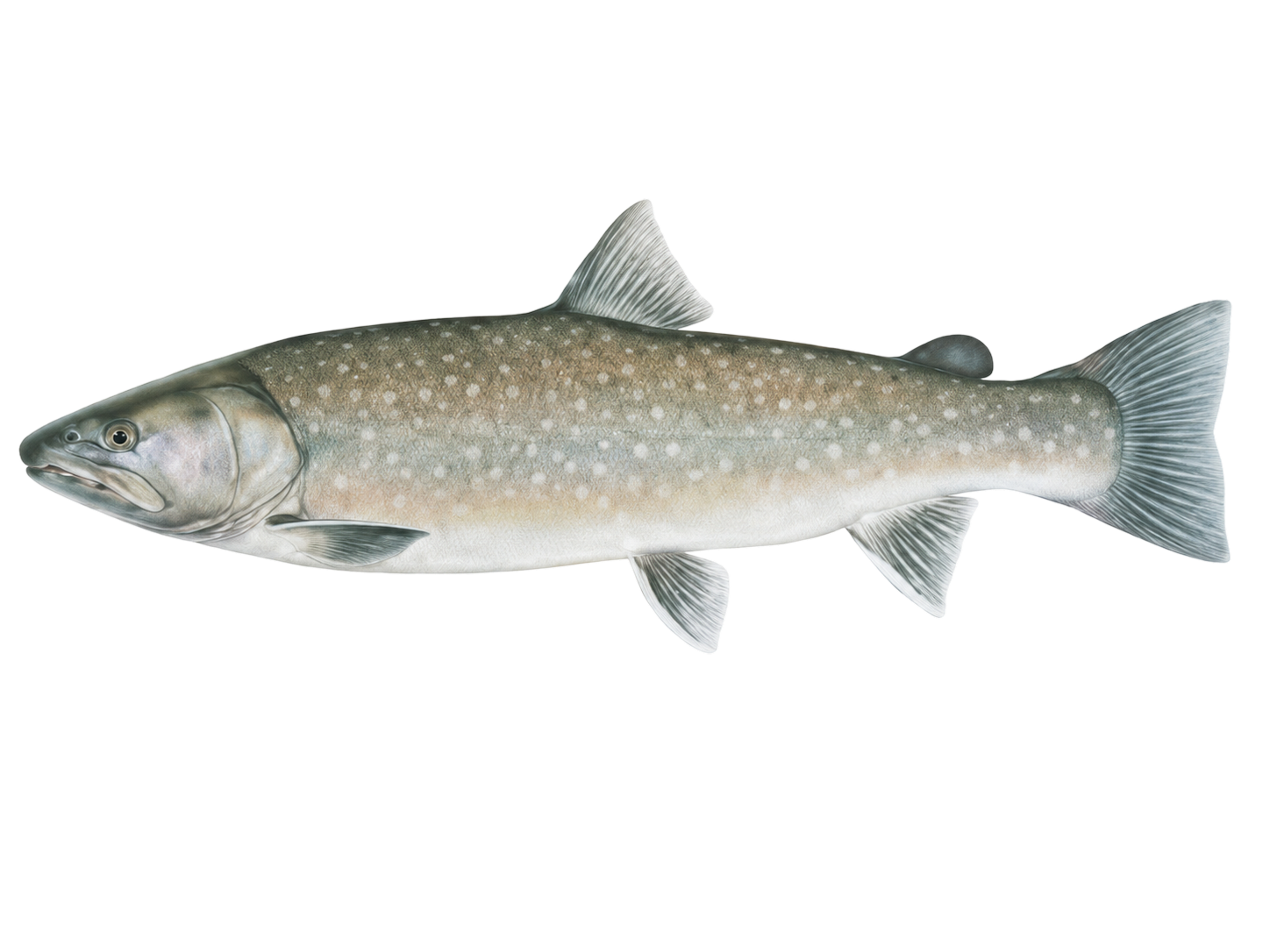
Bull Trout
Bull Trout
Cutbow Trout
Cutbow Trout
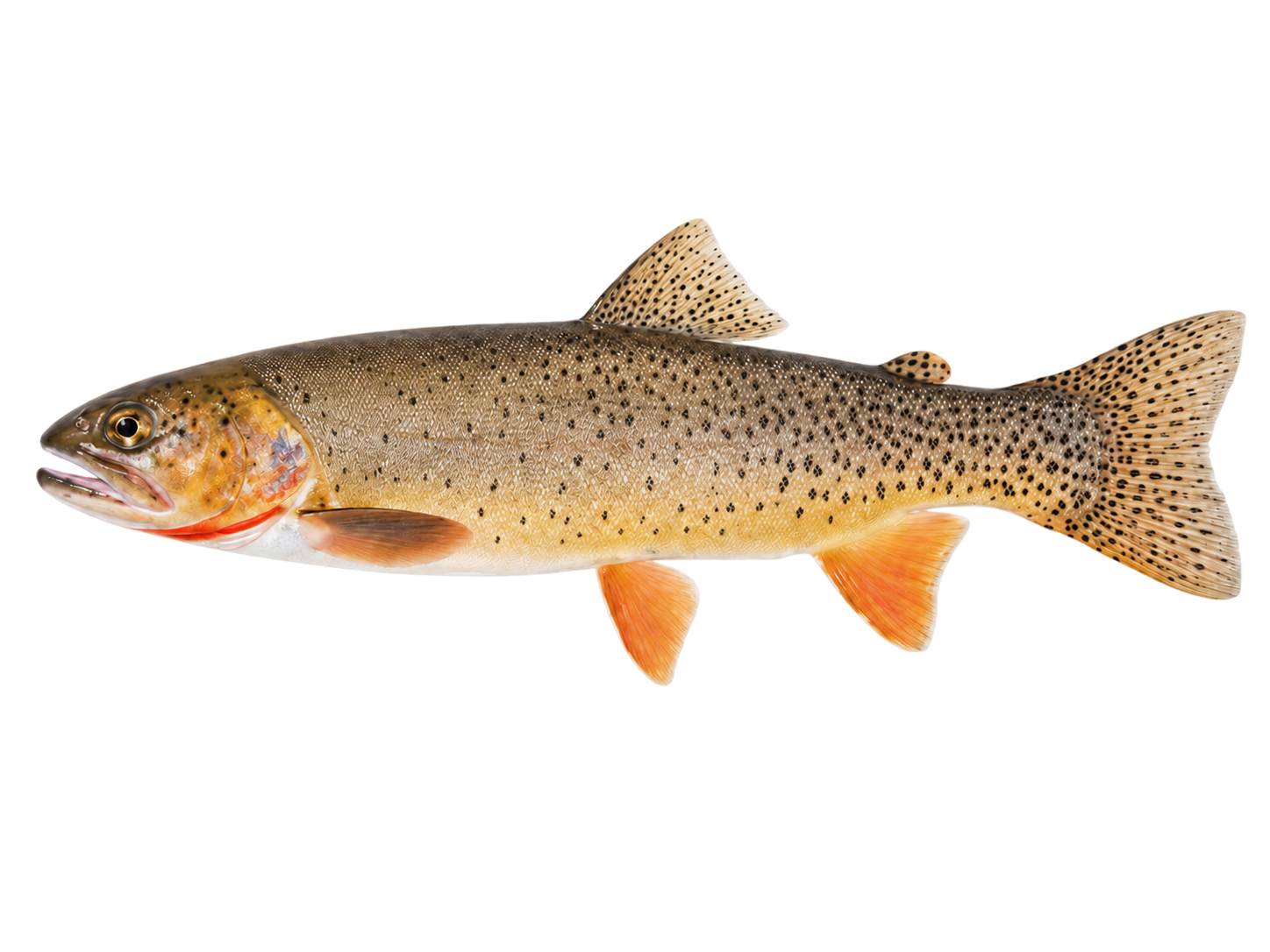
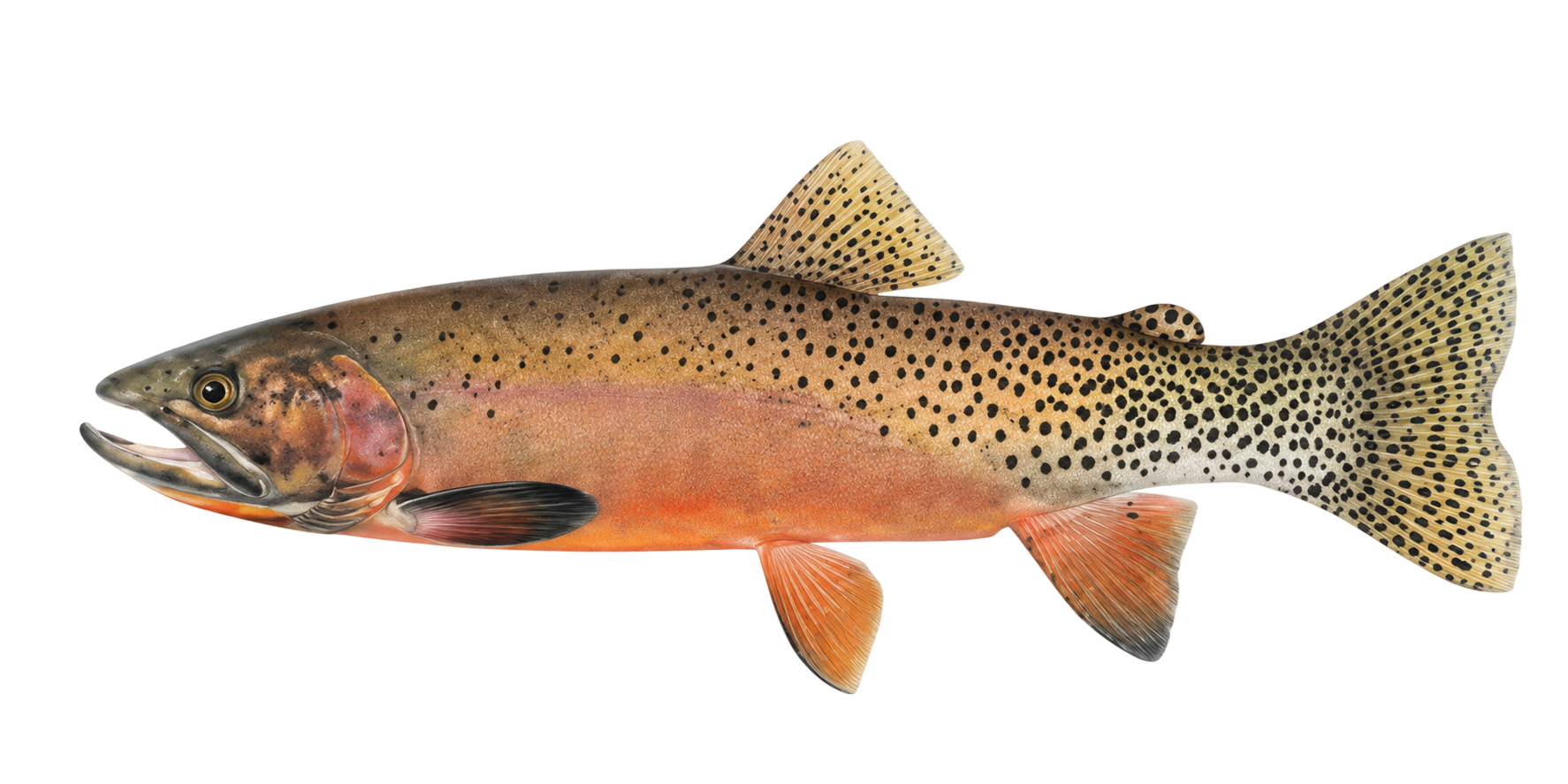
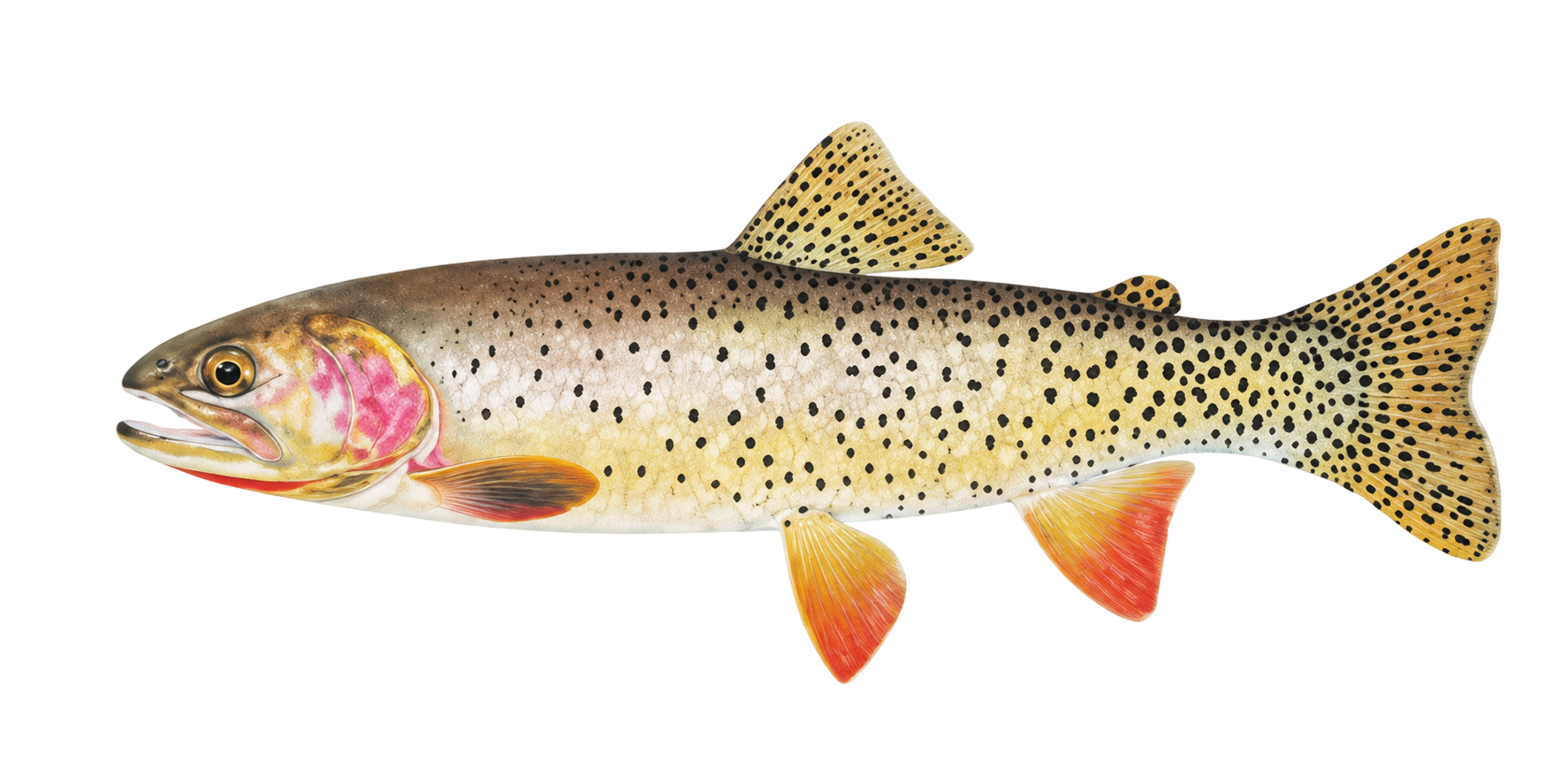
Cutthroat Trout
Cutthroat Trout
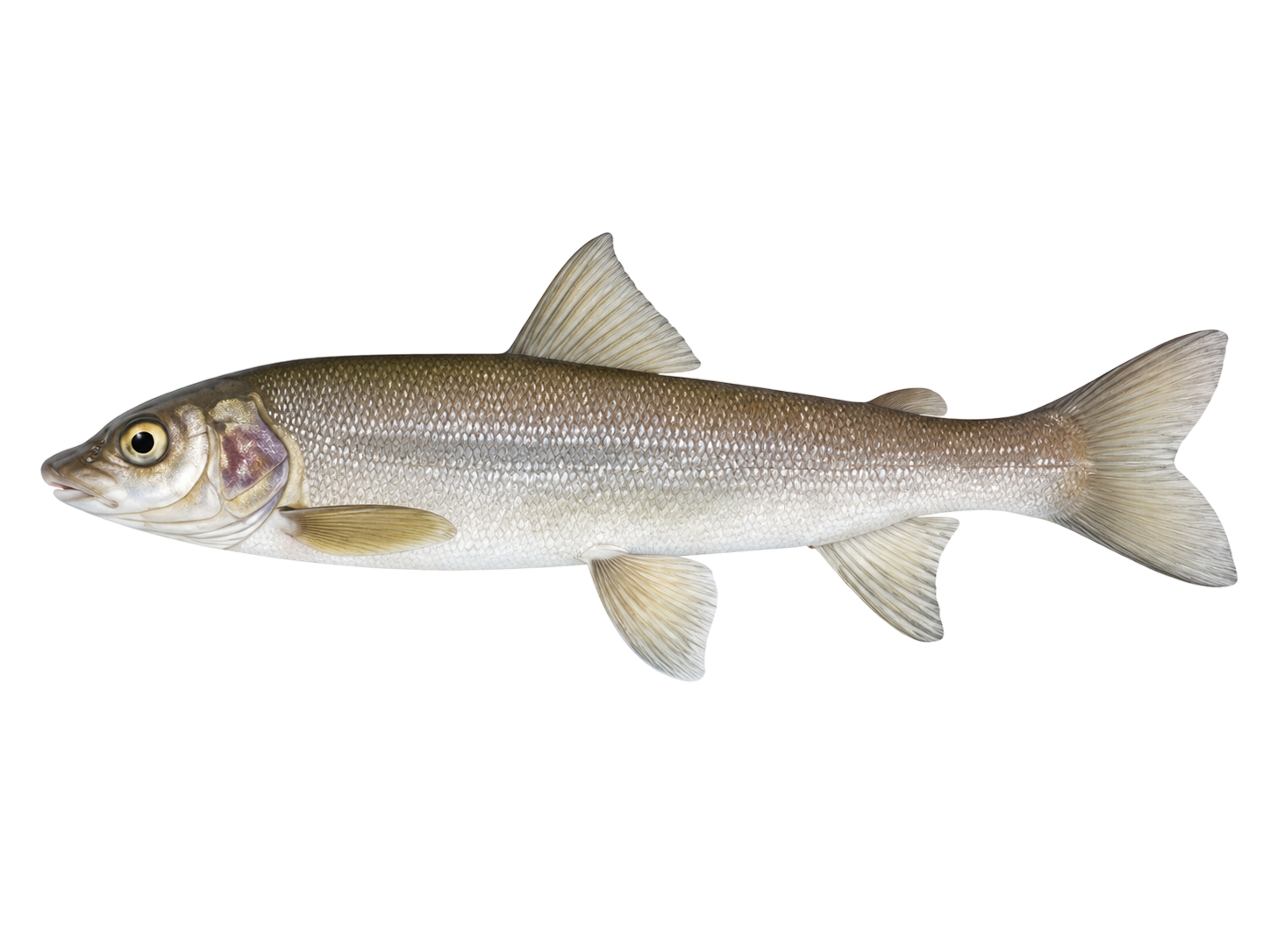
Mountain Whitefish
Mountain Whitefish
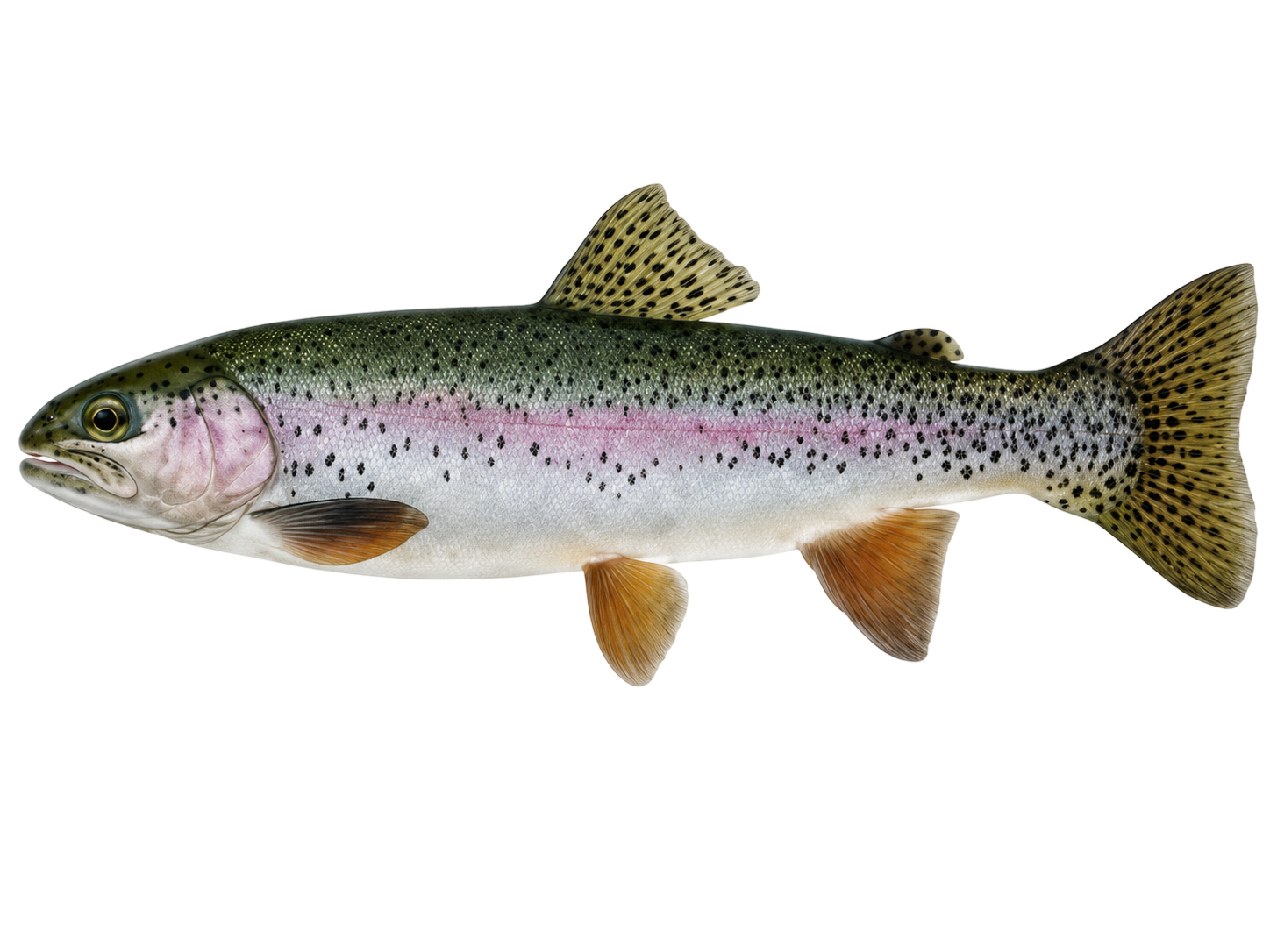
Rainbow Trout
Rainbow Trout
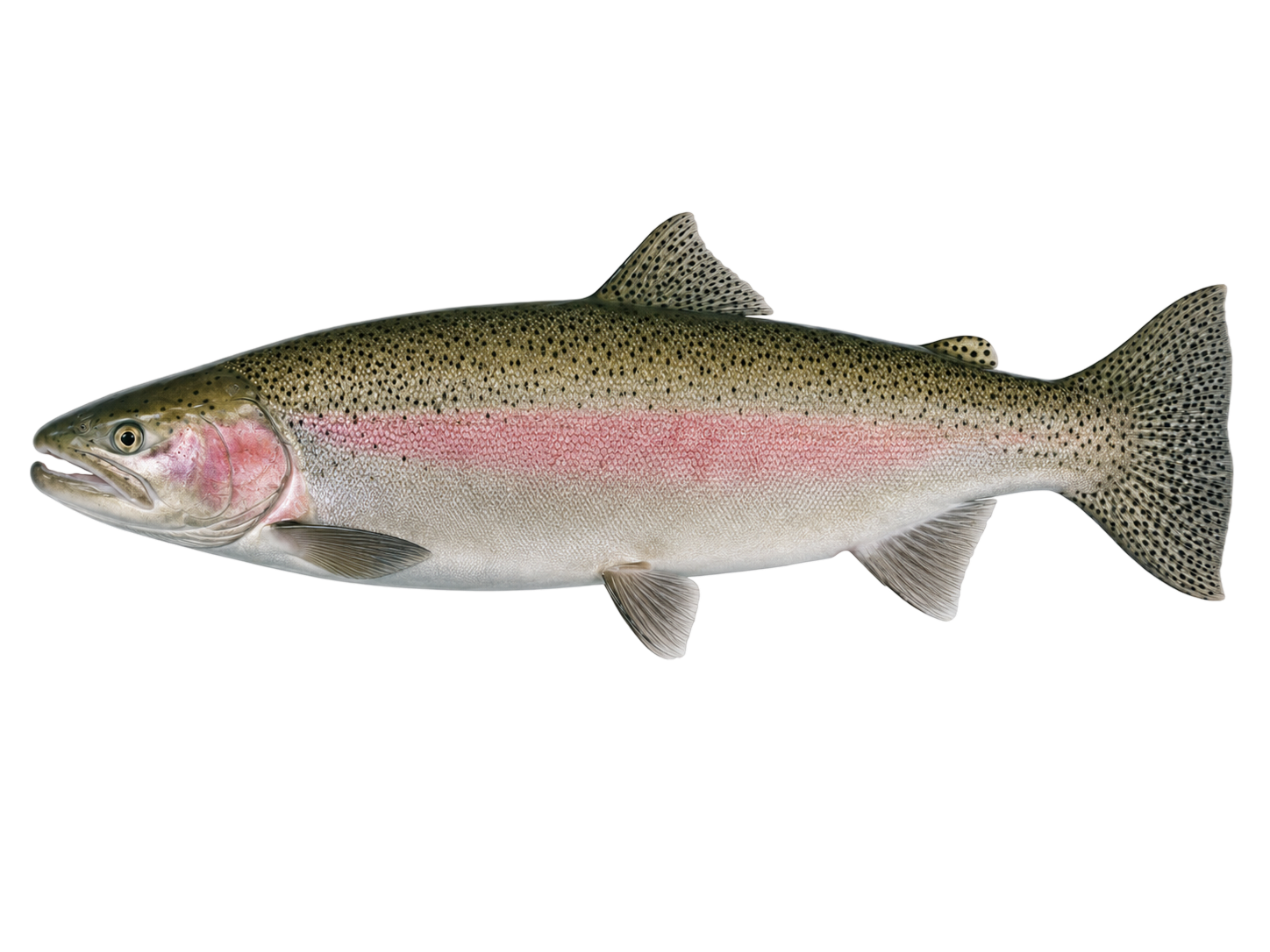
Steelhead
Steelhead
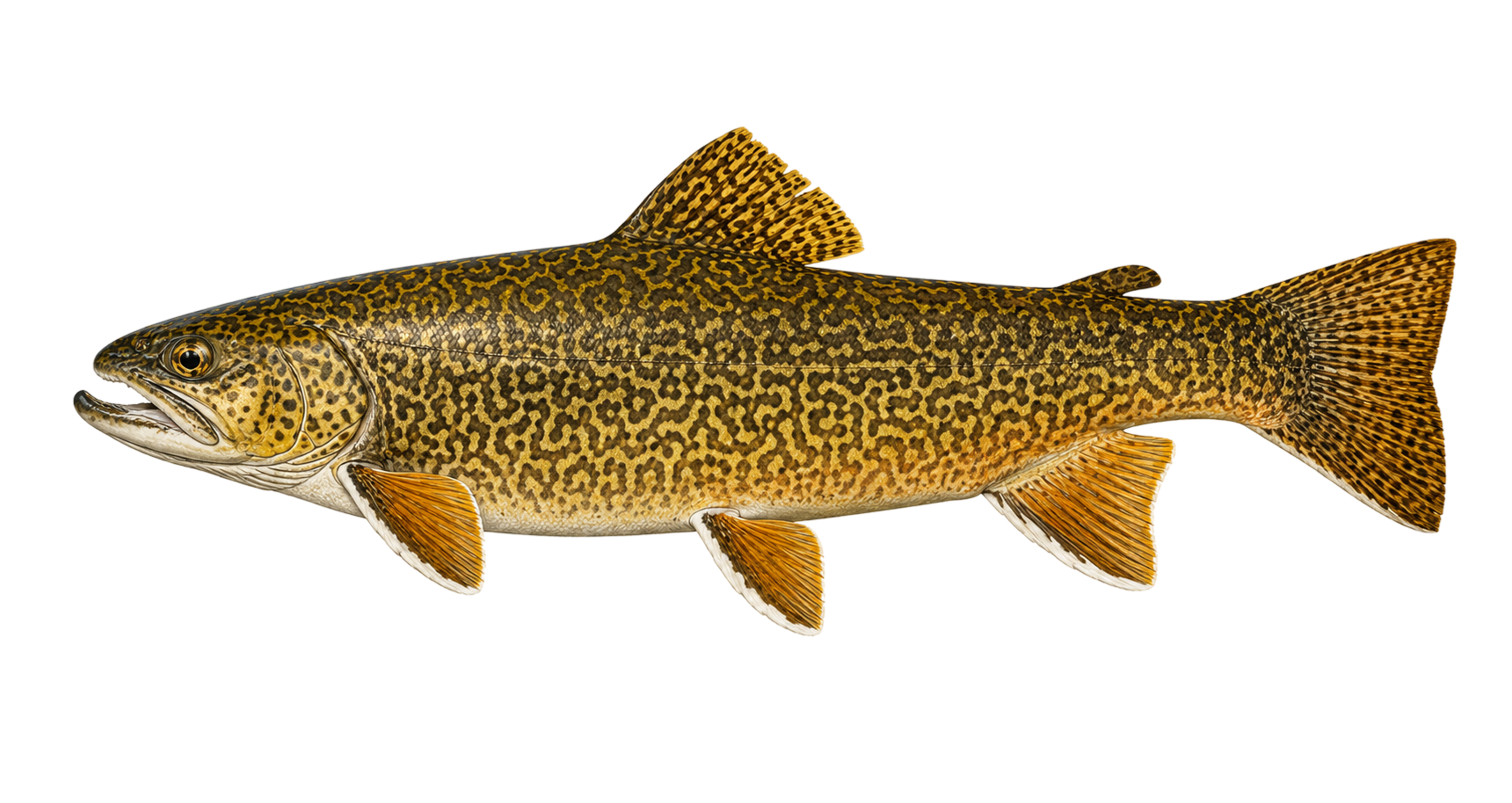
Tiger Trout
Tiger Trout
Westslope Cutthroat Trout
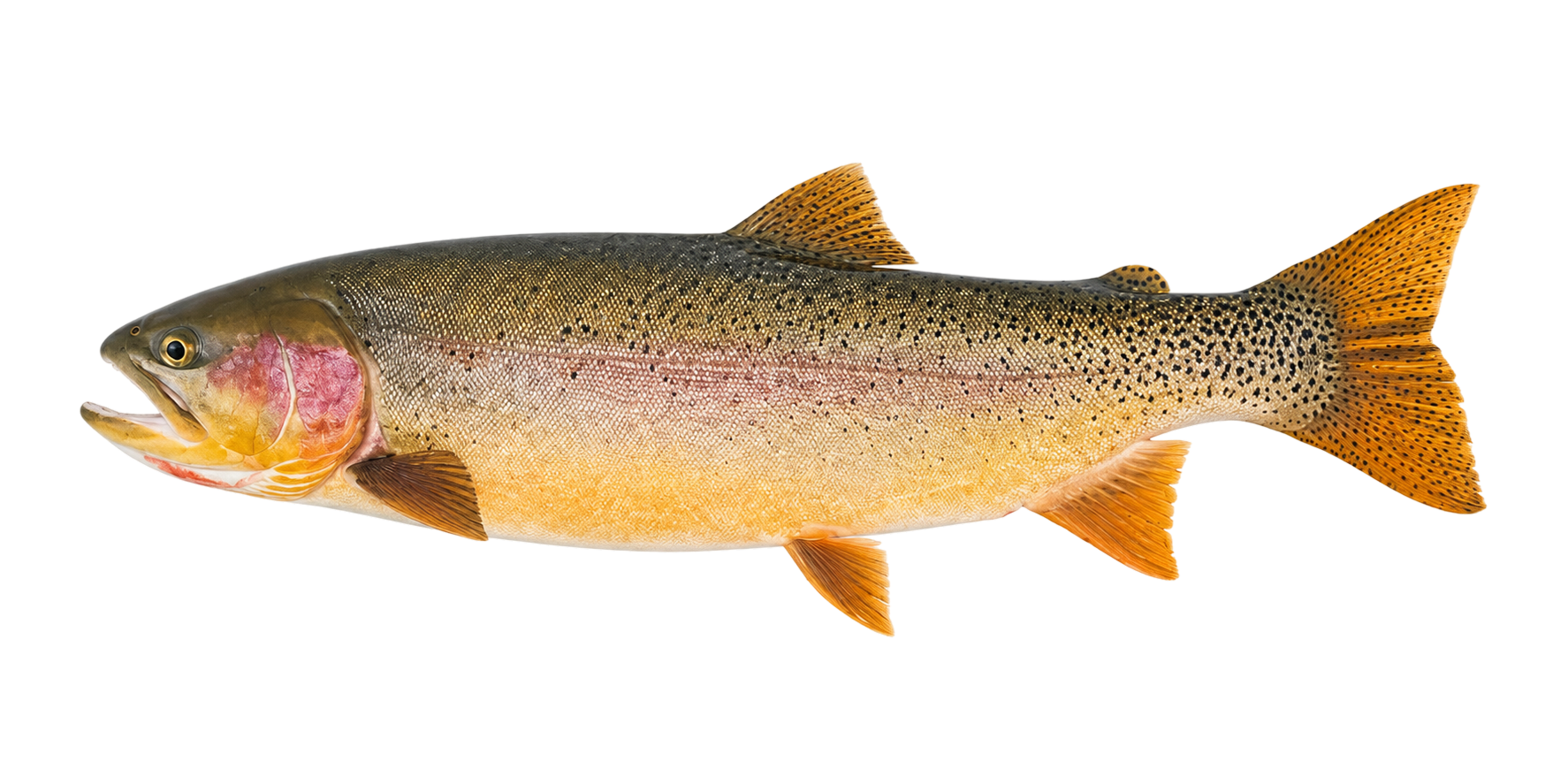
Yellowstone Cutthroat Trout

Salmonfly Photos

Wings Folded One
Wings Folded Two
Wings Open
Nymph
Discarded Exoskeleton

On this page

OverviewLife CycleFly TyingWhere It HatchesFly PatternsAngler NotesIdentificationHabitatEaten ByPhotos

Share & plan

IDFG Planner

On this profile

  • 30 waters
  • 4 fly patterns
  • 12 predator species
  • 4 tying videos
  • 7 life stages

Explore

Browse all hatches & forage
  • Hareline Krystal FlashRootbeer
  • Hareline Mule Deer Hair
  • Montana Fly Company Medium Barred Sexi-FlossOrange
  • Loctite Brush On
  • 1 angler found Salmonfly adult in the last 14 days. Reported from the Barbless app.