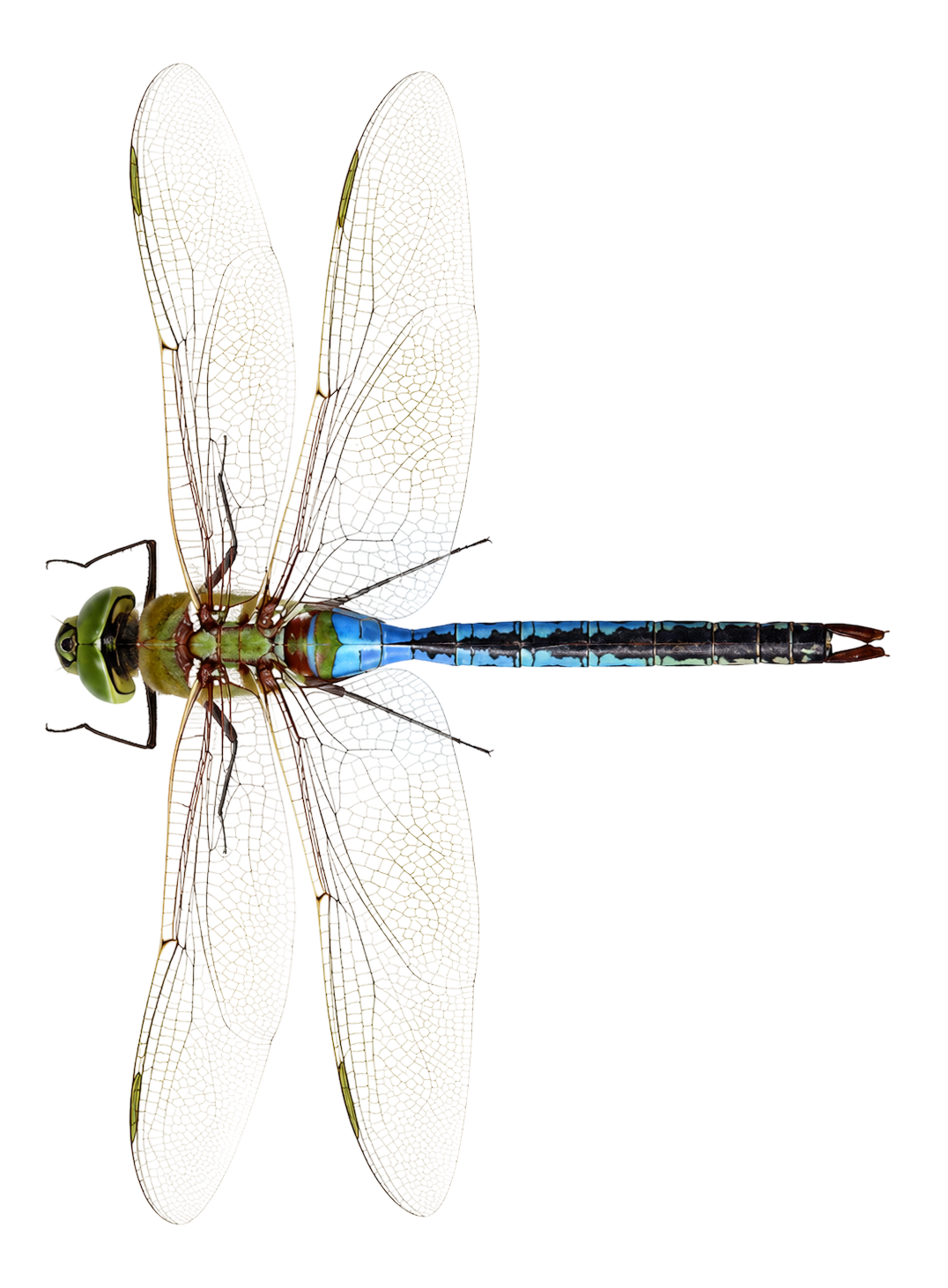
About Dragonfly
Dragonflies go through incomplete metamorphosis: egg, aquatic nymph, and adult. The nymphs, also called naiads, live underwater and are active predators. They feed on other aquatic insects, mosquito larvae, small aquatic organisms, and sometimes even small fish or tadpoles. NC State Extension notes that dragonflies spend most of their life cycle in the nymph stage and require permanent water, while the National Park Service also describes dragonfly larvae as underwater predators.
For anglers, the best dragonfly water is usually slower and more vegetated than classic mayfly riffle water. Think weedy lake edges, ponds, marshy coves, beaver ponds, spring creek bends, sloughs, backwaters, and soft river margins. Dragonfly nymph patterns are especially useful when worked slowly near the bottom, crawled through weeds, or stripped with short pauses along structure.
Adult dragonflies can get eaten too, especially when they crash, get blown down, or skim close to the surface. Still, the nymph is the main angling stage. Fish dragonfly patterns when you are around shallow vegetation, mud-bottom lakes, ponds, and slow edges where trout have time to inspect and ambush bigger prey.
Also known as: dragonfly nymph, dragonfly naiad, naiad, dragon nymph, adult dragonfly, darner, skimmer, clubtail