California Rivers › Trinity County, Northwestern California (Klamath Mountains)
Trinity River
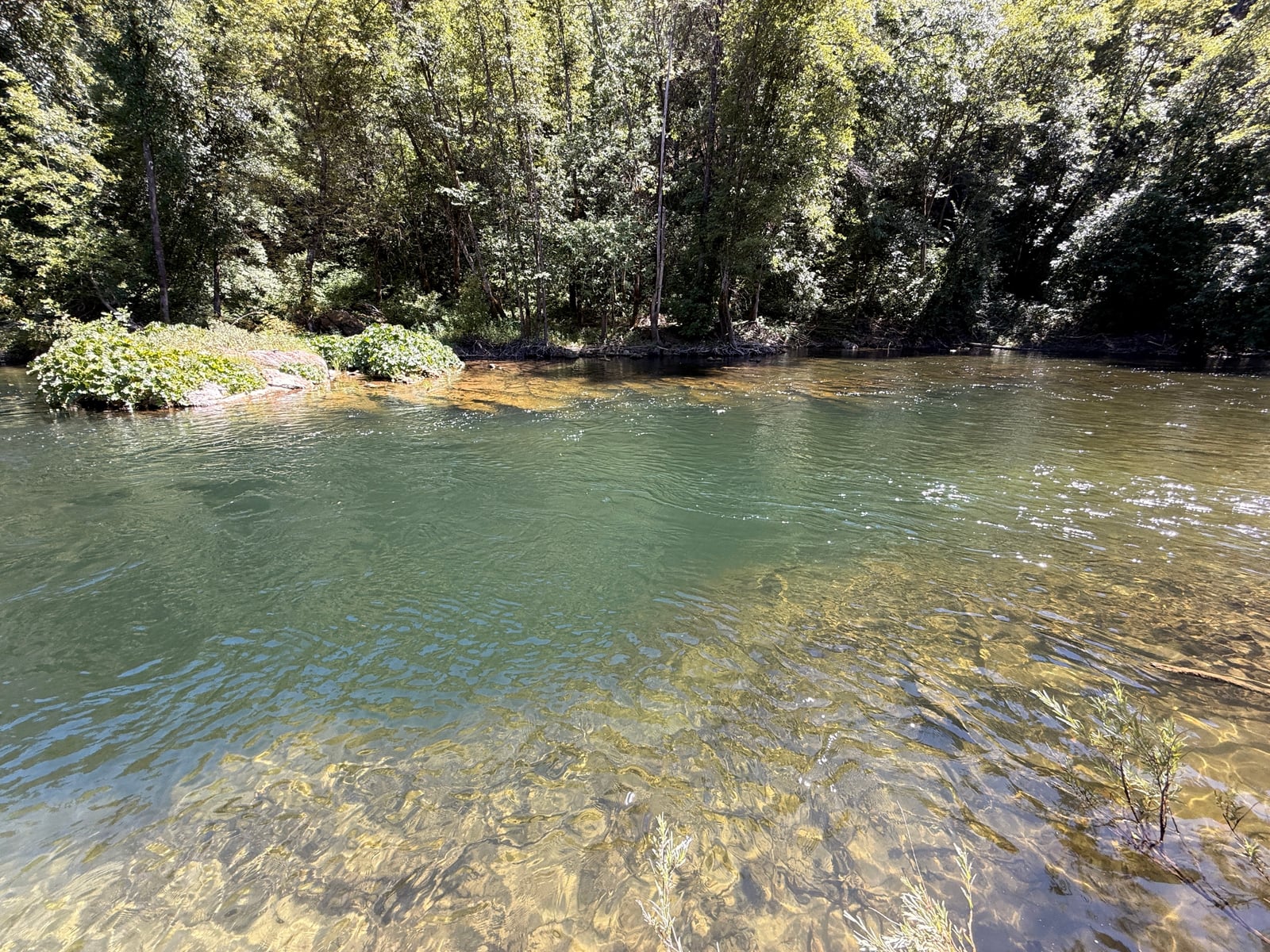
A big Klamath tributary with spring and fall Chinook, winter steelhead and half-pounders, from the hatchery water at Lewiston down through Hoopa to Weitchpec.
Community water166 mi · 268 kmLarge freestone anadromous river below a dam, with canyon reachesSalmon & steelhead
The Trinity is the largest tributary of the Klamath River, a big freestone river that runs through Trinity County to meet the Klamath at Weitchpec. Its anadromous reach ends at Lewiston Dam (river mile 110), which has blocked about 109 miles of upstream habitat since 1963. CDFW's Trinity River Hatchery sits at the base of the dam to make up for that lost habitat. It releases roughly 450,000 steelhead and 4.6 million salmon each year, supporting both conservation goals and a well-known sport fishery. The hatchery near Lewiston is open daily from 8 a.m. to 3 p.m. and has an underwater viewing window.
Below Lewiston, Highway 299 follows the river past Douglas City, Junction City and Big Bar to Del Loma. From Del Loma down to Cedar Flat, 8 road miles, the river spreads over gravel bars with fly riffles, tailouts and long pools. Below Cedar Flat it drops into a deep canyon past Burnt Ranch and Burnt Ranch Falls to Gray Falls, with salmon holes at the foot of steep campground trails. From Gray Falls it opens again past Hawkins Bar and Salyer, and the South Fork comes in just below Salyer. Willow Creek is 5 miles on; from there Highway 96 follows the river 23 miles to Weitchpec. Below Willow Creek it squeezes through Horse Linto Canyon and Tish Tang Gorge, widens through the Hoopa Valley at the Trinity River Bridge, then runs as big water through the Trinity River Canyon below Red Rock to the Klamath. From Weitchpec up through Hoopa the river crosses the Hoopa Valley reservation, which has its own tribal rules and permits; check with the tribe before fishing there. On the South Fork, the lower river runs from Surprise Creek and Todd Ranch to its mouth near Salyer, and the upper reach from Hyampom Bridge, at Hayfork Creek, up to Mule Bridge.
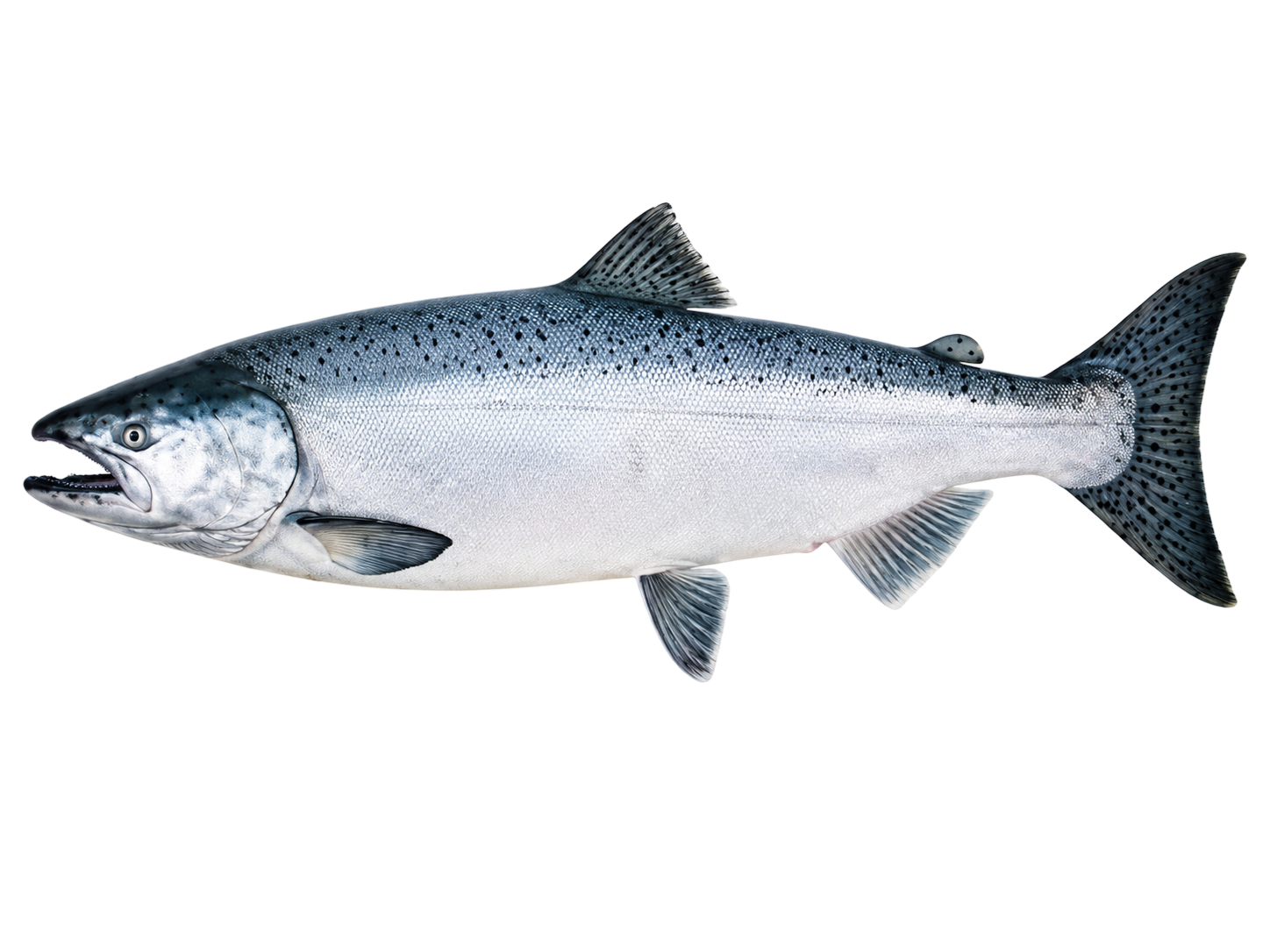
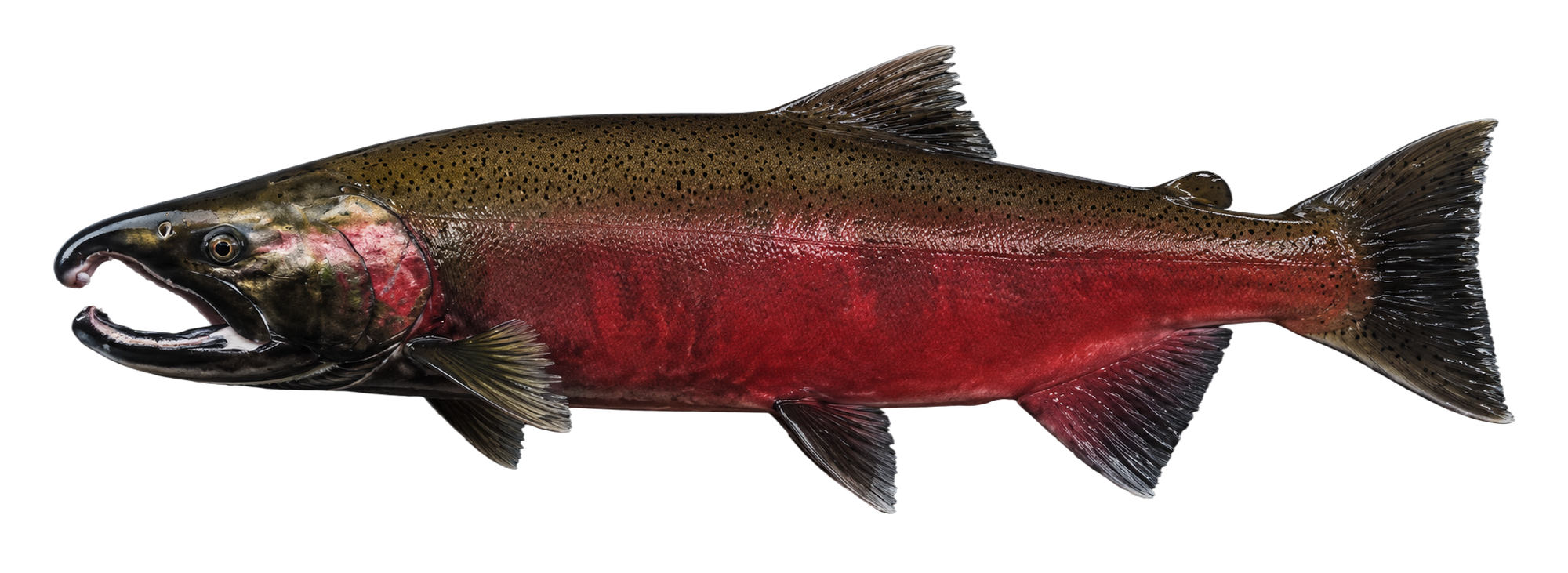
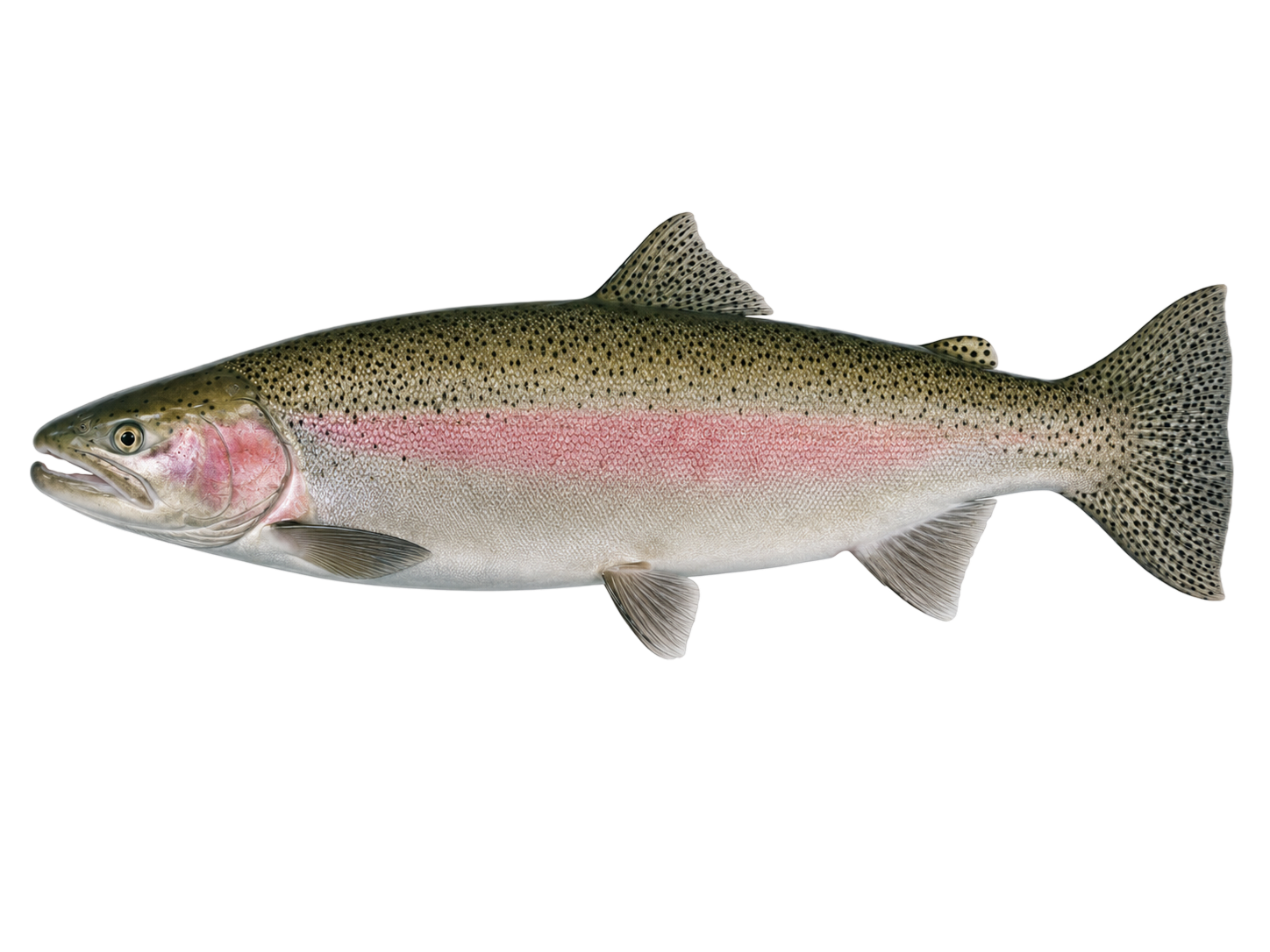
Spring-run Chinook enter the lower Klamath in late March and April and reach the upper Trinity from mid-May through early July. They hold in deep pools until they spawn around mid-September, and CDFW says they provide most of the river salmon fishing. Fall-run Chinook push into the Klamath estuary in mid to late August and reach the upper river by early October. Steelhead return from about November through March, and half-pounders work the riffles near Salyer and Hawkins Bar. Coho salmon also run here from October through December, but they are state endangered and federally threatened, and anglers may not keep them. If you must release a coho, identify it by its black jaw and white-to-grey gums.
Salmon hold in deep holes and eddies, fished with bait, spinners and plugs from the rocks or a drift boat; steelhead sit in riffles, runs and tailouts, where the fly water is. You need a Steelhead Report Card to fish for steelhead, and a separate salmon report card for the Klamath-Trinity system. Seasons, limits and gear rules change and vary by reach, so check the current California freshwater regulations before every trip.
Best Season
Late spring to summer for spring Chinook; fall for fall Chinook; November to March for steelhead
River Type
Large freestone anadromous river below a dam
Skill Level
Intermediate to advanced
Best Techniques
Drift fishing, swinging flies and nymphing for steelhead; drifting roe or bait and casting spinners or plugs in holding pools for Chinook
Access
Highway 299 follows the river from Lewiston to Willow Creek and Highway 96 carries on to Hoopa and Weitchpec, with gravel-bar accesses and drift boat launches along both.
Gauge stations along the Trinity River
Access
Fish in Trinity River
Explore fish species associated with the Trinity River. Each profile includes identification tips, habitat notes, and practical fishing guidance for anglers.
Hatches and food on Trinity River
Review seasonal insect hatches on the Trinity River, including timing windows and fly pattern suggestions for your next trip.
Regulations
Check current seasons, limits, and special rules for Trinity River before you go. Regulations change, so always verify with CDFW.
The latest fishing conditions and hatch notes for Trinity River. Older reports live in the Trinity River report archive.
Videos on Trinity River
These YouTube videos have been hand-curated by our team because we feel they best represent the Trinity River fishery. Watch for river character, access context, and techniques that translate to your next trip.
The Trinity River supports 4 fish species in our fishing catalog. Browse each profile for identification tips, seasonal patterns, and how these species are managed on this water.
These YouTube videos have been hand-curated by our team because we feel they best represent the Trinity River fishery. Watch for river character, access context, and techniques that translate to your next trip.
No videos
No related videos yet.
Salmon & Steelhead returns · Trinity River
Salmon and steelhead counted by the agencies that survey them: each year's return against the ten years before.
Spring Chinook, Trinity River above Junction City weir
1,025 fish returned in 2021, 71% below the 10-year average.Partial count
Every year as a table
Year
Total
2021
1,025
Partial
2020
985
Partial
2019
3,245
Partial
2018
2,378
Partial
2017
1,751
Partial
2016
1,515
Partial
2015
1,323
Partial
2014
2,130
Partial
2013
2,815
Partial
2012
9,311
Partial
2011
9,373
Partial
2010
6,776
Partial
2009
3,453
Partial
2008
5,706
Partial
2007
Fall Chinook, Trinity River above Willow Creek weir
15,031 fish returned in 2024, 63% above the 8-year average.Partial count
Coho, Trinity River above Willow Creek weir
1,733 fish returned in 2024, 3.9x the 10-year average.Partial count
Wild steelhead, Trinity River above Willow Creek weir
3,823 fish returned in 2025, about the 10-year average.Partial count
2,736
Partial
2006
3,825
Partial
2005
3,018
Partial
2004
4,822
Partial
2003
14,249
Partial
2002
12,636
Partial
Every year as a table
Year
Total
2024
15,031
Partial
2021
8,434
Partial
2020
10,284
Partial
2019
6,887
Partial
2018
12,737
Partial
2017
8,081
Partial
2016
4,008
Partial
2015
5,834
Partial
2014
17,367
Partial
2013
23,618
Partial
2012
40,931
Partial
2011
47,944
Partial
2010
24,939
Partial
2009
19,521
Partial
2008
14,412
Partial
2007
34,240
Partial
2006
13,144
Partial
2005
8,557
Partial
2004
3,578
Partial
2003
11,418
Partial
2002
8,681
Partial
Every year as a table
Year
Total
2024
1,733
Partial
2023
608
Partial
2022
575
Partial
2021
221
Partial
2020
220
Partial
2019
109
Partial
2018
60
Partial
2017
65
Partial
2016
798
Partial
2015
814
Partial
2014
1,001
Partial
2013
4,457
Partial
2012
1,966
Partial
2011
1,413
Partial
2010
861
Partial
2009
643
Partial
2008
1,312
Partial
2007
1,199
Partial
2006
1,624
Partial
2005
2,729
Partial
2004
9,055
Partial
2003
4,093
Partial
2002
596
Partial
2001
3,372
Partial
2000
539
Partial
1999
586
Partial
1998
1,132
Partial
1997
758
Partial
Every year as a table
Year
Total
2025
3,823
Partial
2024
3,681
Partial
2023
7,768
Partial
2022
3,088
Partial
2021
1,936
Partial
2020
3,459
Partial
2019
2,354
Partial
2018
2,348
Partial
2017
1,972
Partial
2016
2,454
Partial
2015
5,822
Partial
2014
9,205
Partial
2013
8,359
Partial
2012
6,932
Partial
2011
3,811
Partial
2010
5,047
Partial
2009
5,477
Partial
2008
7,506
Partial
2007
8,781
Partial
2006
5,363
Partial
2005
4,817
Partial
2004
3,947
Partial
2003
4,650
Partial
Hatches and food on Trinity River
The Trinity River has 4 documented insect hatches and 1 food source across spring, summer, fall, and winter. Review seasonal timing and recommended fly patterns to plan productive days on this water.